

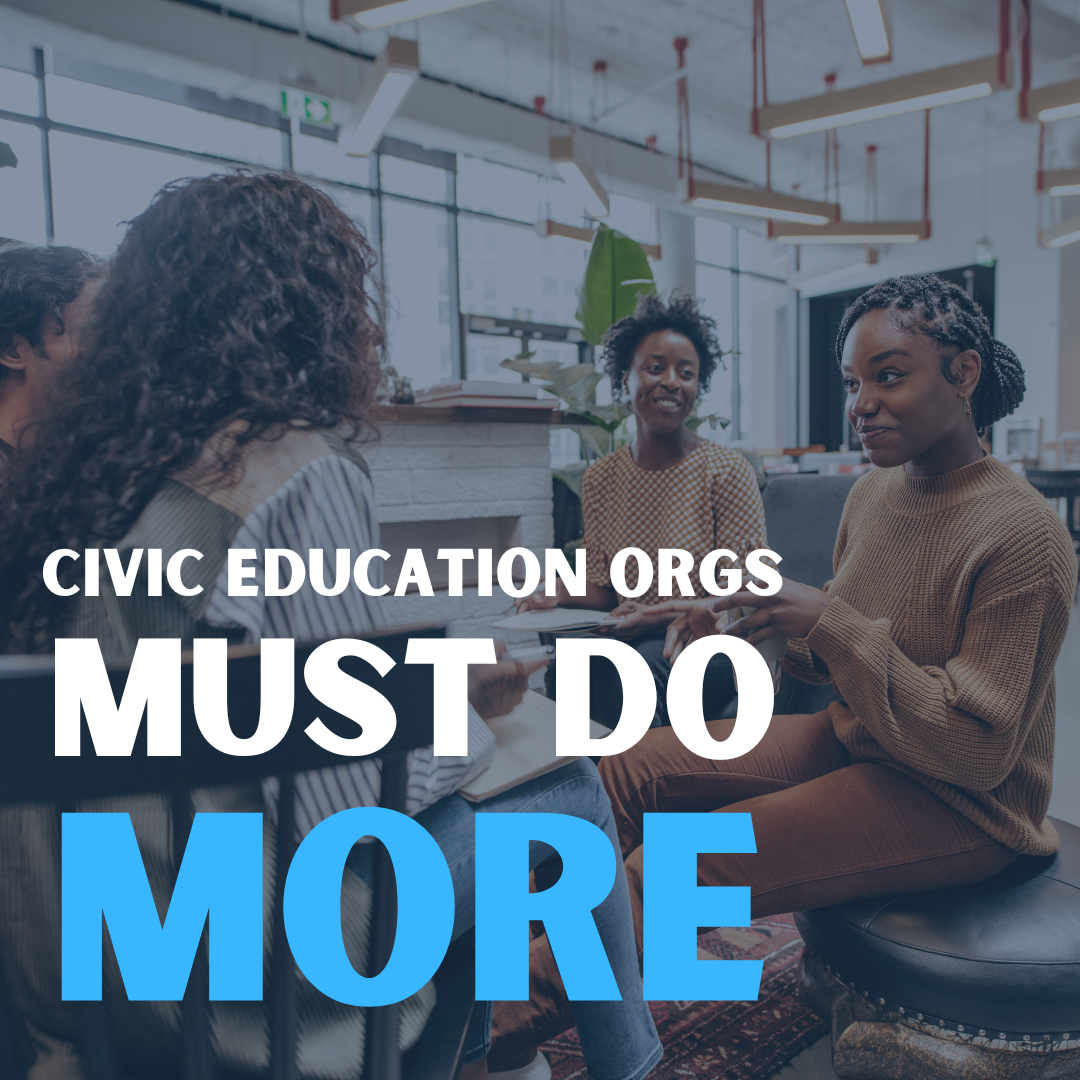
Let’s be honest—democracy is in trouble. Trust in government is plummeting, misinformation is running rampant, and too many people are throwing up their hands and walking away from civic life. If you’ve ever felt like your voice doesn’t matter, you’re not alone. But here’s the thing: giving up isn’t an option. Now more than ever, civic education organizations—groups that teach people how government works and why participation matters—must move beyond education and step into action. It’s time to be the frontline defenders of democracy, right where it matters most: in our communities.
But let’s start with the elephant in the room: people don’t trust government anymore. And honestly, can you blame them? Between partisan gridlock, bad-faith actors, and institutions that don’t always work as they should, it’s easy to become cynical. But democracy can’t function if people check out. That’s where civic education organizations come in. We need to remind people—through real, tangible experiences—that their voices still matter. That they can make a difference. And that starts at the local level, where change is the most immediate and impactful.
When I first conceived CivicsEDU, I had no idea that it would launch in such a perilous time in our nation’s history. If recent events have proven anything, it’s that our organization’s mission is more important now than ever before.
Too often, civic education stops at “Here’s how a bill becomes a law” or “Make sure to vote in November.” That’s not enough. People need hands-on training in how to engage with local government, how to organize their communities, and how to advocate for change. Imagine workshops that teach people how to show up at city council meetings and make their voices heard. Or mentorship programs that connect young leaders with experienced advocates. When people feel like they know how to participate, they’re more likely to actually do it.
At the same time, let’s face it—false information spreads faster than the truth these days. Between social media echo chambers and outright propaganda, it’s no wonder people don’t know what to believe. Civic education organizations need to take the lead in busting myths about government, elections, and policy issues. This means creating easy-to-understand, fact-based content that’s engaging, shareable, and (dare we say) fun. Think bite-sized explainer videos, engaging social media posts, and interactive discussions that empower people to separate fact from fiction.
And it’s not just misinformation that’s chipping away at democracy. Voter suppression, gerrymandering, and attempts to cast doubt on elections are all real threats. Civic education organizations need to be loud and clear: democracy only works when everyone has a fair shot at participation. That means standing up for voting rights, advocating for fair representation, and making sure people understand what’s at stake. And when bad policies threaten democracy? We have to call them out—plain and simple.
Here’s a radical idea: what if we actually made civic engagement cool again? Democracy isn’t just about laws and policies—it’s about people. It’s about neighbors coming together to solve problems. It’s about conversations that bridge divides. And it’s about reminding each other that we’re in this together. Civic education organizations can lead the charge by fostering spaces for real dialogue, organizing community events, and creating leadership opportunities for the next generation. If we want democracy to thrive, we have to make it a part of everyday life.
Look, democracy isn’t going to fix itself. It needs us—all of us—to step up and protect it. Civic education organizations have the knowledge, the resources, and the reach to make a real impact. But we can’t afford to just teach about democracy—we have to live it. We have to make it engaging, accessible, and, yes, even exciting. Because if we don’t? Well, the forces working to dismantle democracy aren’t going to wait around for us to catch up.
So let’s get to work. Our democracy depends on it.
Leave a Reply